


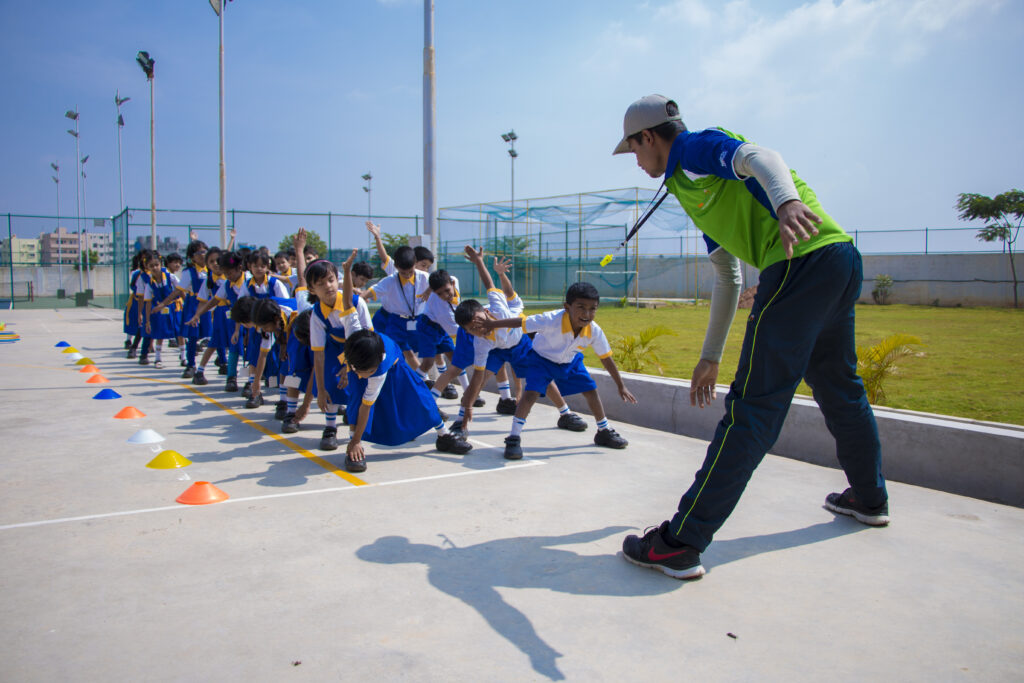
Sportz Village EduSports, India’s leading school sports organisation, today released the findings of its landmark 14th Annual Health Survey (AHS) 2026. Spanning 1,41,840 children across 333 schools in 112 cities, the report delivers evidence-based insights into post-COVID fitness recovery, the decisive impact of structured Physical Education (P.E.), and persistent health gaps that demand urgent systemic action.
Launched in 2010, the Annual Health Survey has become India’s definitive barometer of children’s physical health. The 14th edition assesses seven key parameters including Body Mass Index (BMI), Aerobic Capacity, Anaerobic Capacity, Upper Body Strength, Lower Body Strength, Core/Abdominal Strength, and Flexibility. Therefore, providing an unmatched longitudinal view of how India’s children are growing up.
Two out of every three school-going children in India cannot sustain basic cardiorespiratory activity. Aerobic fitness is the single strongest predictor of lifelong cardiovascular health, and its absence in childhood is a direct pipeline to adult diabetes, hypertension and heart disease. Across all schools, this is the most alarming and most stubborn deficit the survey has tracked in 14 years.
Alongside this, 40% of children fall outside a healthy BMI range, a figure that has barely shifted across three years of post-COVID recovery (59.1% healthy in 2023; 59.6% in 2025), confirming that body composition responds to sustained lifestyle change far more than to school PE alone. Beyond that, 49% of children fail to meet the upper body strength benchmark and 44% fall short on lower body strength, gaps that point to a generation that is sedentary, screen-bound and physically underprepared.
Saumil Majmudar, Co-founder, CEO & MD, Sportz Village, said, “This year’s findings rearm something we have always believed – healthy childhoods are intentionally built! At a time when children are facing rising lifestyle-related health risks and growing emotional pressures, building healthy habits early has never been more important. Schools play a critical role by designing structured opportunities for movement, but lasting impact comes when families and communities support the same environment. As a country, we must continue to track and understand children’s well-being at scale, so that we can respond meaningfully and collectively. The opportunity before us is clear – to act with intent today and create healthier, happier childhoods for the years ahead.”