



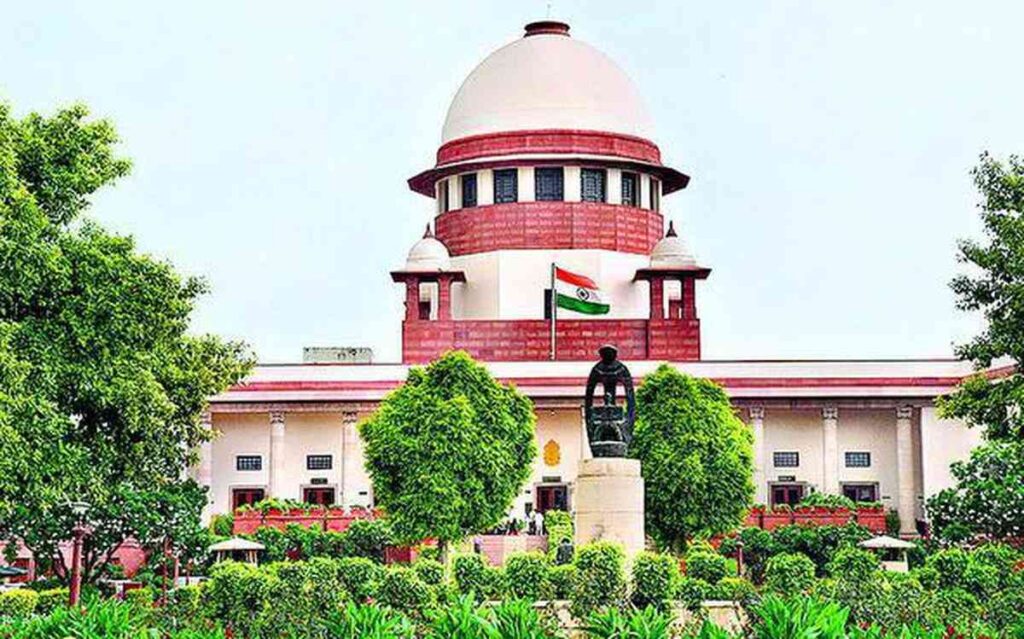
On Monday, the Supreme Court delivered its verdict on a plea seeking a stay on the Waqf (Amendment) Act, 2025. While over 100 petitioners denounced the law as a “creeping acquisition” of Muslim properties, the government defended it as an essential measure to curb “widespread encroachment” on both public and private lands.The bench of Chief Justice of India B R Gavai and Justice A G Masih noted that provisions such as Sections 3(r), 3C, and 14 of the Waqf (Amendment) Act, 2025 are invalid, and therefore decided to put them on hold.The court clarified that the executive cannot determine anyone’s rights. Until a final decision regarding property is taken in revenue records, no changes can be made to the ownership rights of Waqf properties. However, the court also stated that any third-party rights will not be recognised.Commenting on the structure of Waqf Boards, the Supreme Court held that at the state level, no more than three non-Muslim members can be part of the board. In other words, out of 11 members, Muslim members must remain in the majority. Furthermore, the board’s Chief Executive Officer must be a Muslim.