


Building on this momentum, vivo India will be scaling its endeavour to reach more students for the fourth edition.
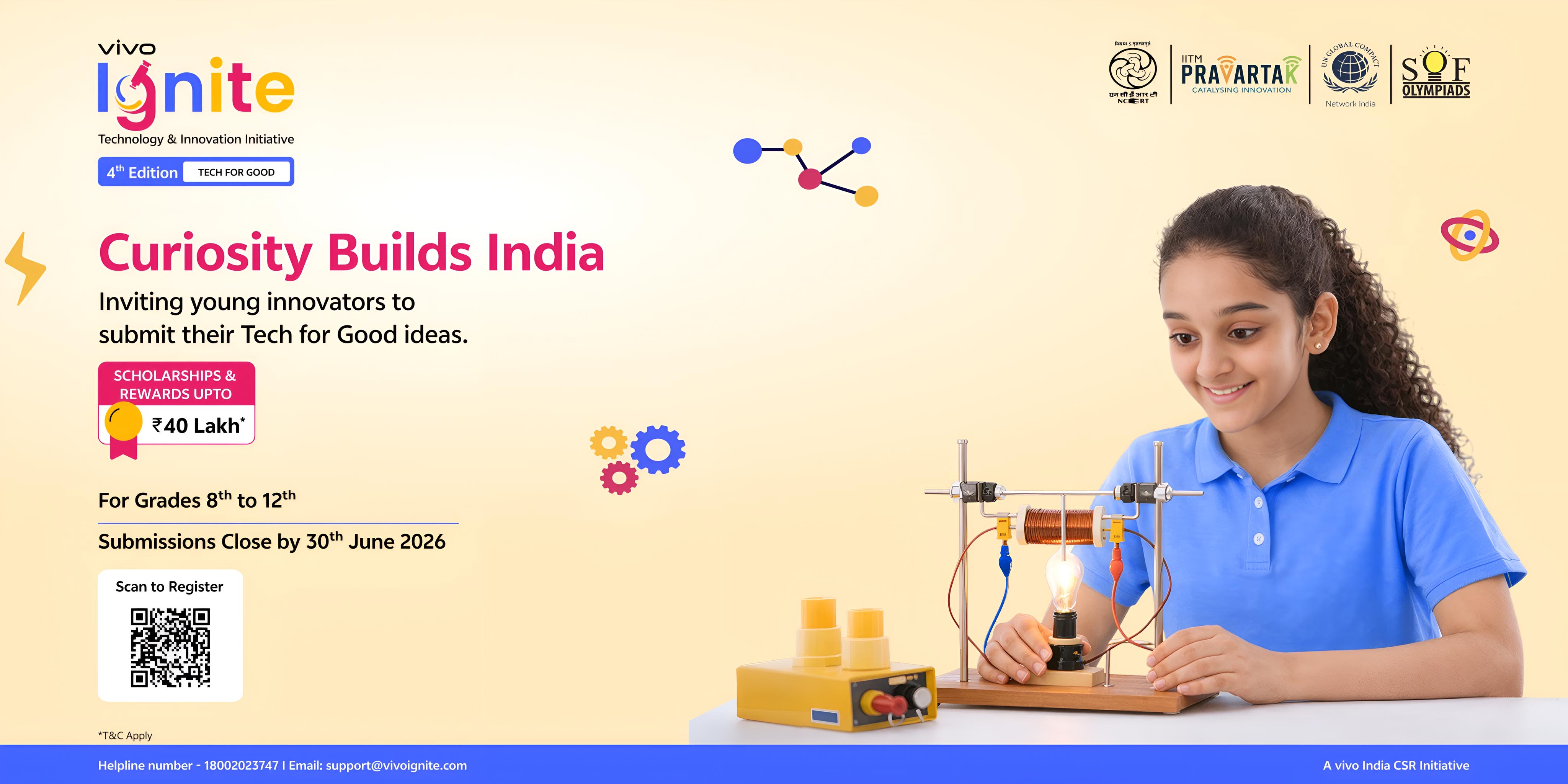
vivo India, the innovative smartphone brand, today announced the fourth edition of vivo Ignite: Technology and Innovation Initiative, its flagship education programme.
Open to students across grades 8 to 12, the nation-wide education program aims to nurture young innovators and inspire the next generation of technology leaders. It encourages students to transform their ideas into meaningful solutions and address real-world challenges important to India’s future.
Speaking on the launch, Geetaj Channana, Chief Corporate Communications Officer, vivo India, said, “With our 4th edition, we are making the programme more inclusive, more mentorship focused, and more rewarding than ever. Our commitment remains to empower more students and motivating more teacher from every corner of India, turning their idea into something real. That is the spirit of vivo Ignite – powering ambitions for generation tomorrow and unlocking possibilities for all.”
In the fourth edition, students will have the opportunity to submit individual or group entries (with a maximum of three members per group) in the Prototype category under diverse themes, including Community Development Innovations; Soft-Tech Innovations, Technology, Agriculture & Climate Change and other category where technology is used, with overarching alignment with the Sustainable Development Goals (SDGs).
The competition will be conducted in seven stages, with the National Finale taking place on October 11th in New Delhi where the Top 10 prototypes will be presented by 10 finalist individual/group and felicitated by eminent Jury and stand a chance to secure educational scholarships and rewards with total pool size of INR 40 Lakhs2.
Over its past three editions, vivo Ignite has seen strong and growing participation from across the country. The third edition alone received over 37,000 registrations from 9,000+ schools across 660+ districts – double the participation of the year before, reinforcing the programme’s expanding national footprint and relevance among students and educators.