


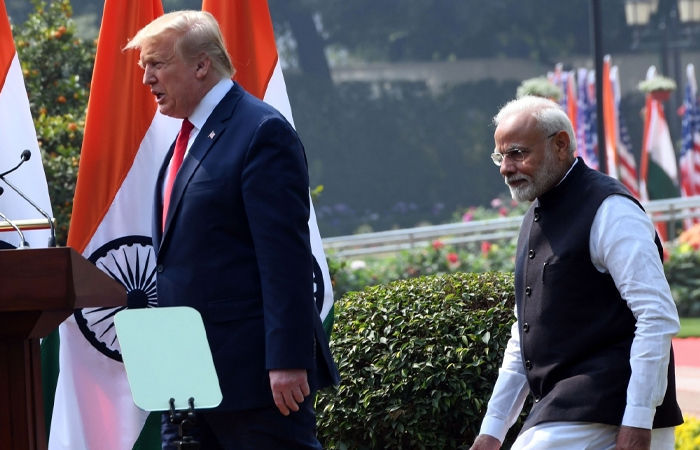
The newly announced India-United States trade agreement has sparked political and social backlash, with farmer organisations accusing the Centre of compromising domestic agricultural interests. While the government has described the pact announced by Prime Minister Narendra Modi and US President Donald Trump as a “game-changer” for economic growth, critics argue it could severely impact Indian farmers and the dairy sector.
The Samyukta Kisan Morcha (SKM), which spearheaded the 2020-21 farmers’ agitation, has condemned the deal, alleging that the government has “bowed to American imperialism”. The organisation claims that provisions allowing zero-duty imports of select US products threaten to undermine Indian agriculture.Farmer unions fear that heavily subsidised American farm produce could flood Indian markets, pushing down prices and depriving domestic farmers of fair returns. They warn that such imports could destabilise the country’s agriculture-based economy if adequate safeguards are not enforced.
President Trump has stated that India is expected to import nearly $500 billion worth of oil, coal, technology and agricultural products from the US under the agreement. However, economists have questioned this projection, noting that India’s total goods imports currently stand at around $721 billion.Experts suggest that India’s increased imports are likely to focus on crude oil, liquefied natural gas (LNG), advanced semiconductor chips and nuclear technology over the next five years. In return, the US has agreed to cut tariffs on Indian exports by 32 per cent, a move expected to benefit sectors such as textiles, gems and jewelry.
The government has sought to allay concerns, clarifying that key agricultural commodities including food grains, corn, soybeans and genetically modified (GM) products may be excluded from the agreement.
Officials have also assured that the interests of the dairy and animal husbandry sectors will remain protected. Authorities stated that any import concessions would be introduced gradually to minimise disruptions to local industries.