


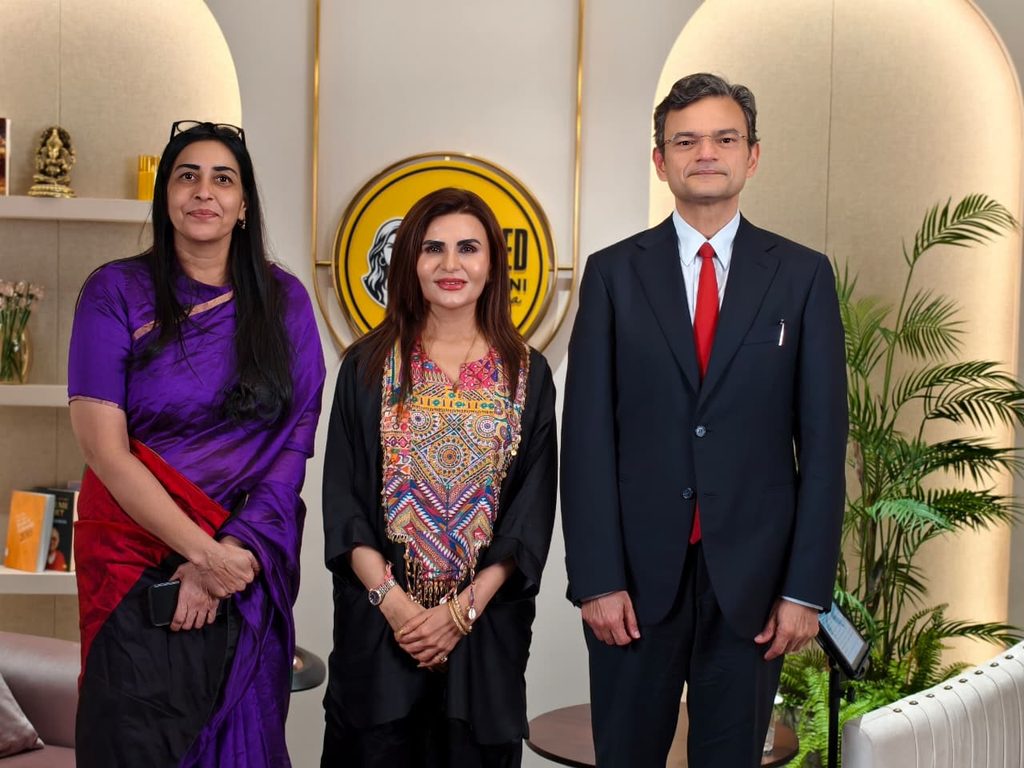
Can science save more lives, can Artificial Intelligence redefine human potential, and can India transform its scientific talent into global innovation? These questions shaped an engaging episode of Decoded with Chandni Kapadia at GLS University, featuring renowned scientist and author Dr. Anand Ranganathan and Professor and scientist Dr. Shailja Singh from Jawaharlal Nehru University (JNU), New Delhi, in conversation with Dr. Chandni Kapadia, Executive Director, GLS University.
The conversation began with the personal journeys that shaped the two scientists. Dr. Shailja Singh reflected on how her father’s dedication to medicine and her early exposure to the impact of infectious diseases inspired her commitment to scientific research. Their discussion soon moved to a shared purpose: translating scientific discoveries into solutions that can improve and save lives.Emphasising this commitment, Dr. Anand Ranganathan said, “We want to save at least one life.” Reflecting on the lessons of the COVID-19 pandemic, he highlighted the importance of moving beyond academic publications towards practical healthcare solutions, particularly in vaccine development and malaria research.The discussion explored India’s research ecosystem, highlighting challenges such as inadequate infrastructure, administrative hurdles and limited research support. Both scientists stressed the need to strengthen research and development, encourage private-sector participation and create an environment where young researchers can innovate and contribute to India’s scientific progress.Artificial Intelligence emerged as a key theme, with Dr. Ranganathan discussing its potential to transform scientific discovery, drug development and employment. He emphasised the importance of developing India’s own AI capabilities. Dr. Shailja Singh highlighted the importance of “learning by doing” in science education, advocating practical experiences that encourage critical thinking and problem-solving. She also drew attention to mental health concerns among young people and the need to address them without stigma.The conversation further explored governance, media responsibility, women’s representation in science and the role of educational institutions in preparing students for a rapidly changing world. Through candid exchanges and thought-provoking rapid-fire questions, the guests reflected on India’s missed opportunities, technological advancement and the importance of independent thinking.The episode concluded with Dr. Shailja Singh describing the conversation as “A discussion to think” — a fitting reflection of an interaction that encouraged students to question established ideas and look beyond conventional perspectives.Through Decoded with Chandni Kapadia, GLS University continues to bring distinguished voices from science, academia and public life into meaningful dialogue with students and wider audiences. The interaction highlighted a larger message: India’s future will depend not only on scientific discoveries and technological advancements, but also on the ability to transform knowledge into meaningful change for society.